Active pharmaceutical ingredient intermediates are the molecular building blocks upon which every finished drug product depends. When an intermediate fails — whether through impurity, delayed delivery, or regulatory disqualification — the consequences cascade through clinical timelines, manufacturing schedules, and ultimately patient access. Yet many pharmaceutical procurement teams continue to source API intermediates primarily on unit price, a metric that systematically understates the true cost of offshore procurement and obscures the compounding risks embedded in extended global supply chains. This guide examines the full risk landscape of offshore API intermediate sourcing and makes the quantitative case for domestic partnerships.
The Hidden Risk Profile of Offshore API Intermediate Sourcing
The pharmaceutical industry’s migration of API intermediate production to offshore facilities — primarily in China and India — accelerated through the 2000s and 2010s, driven by unit price differentials that ranged from 30% to 70% below domestic alternatives. By 2020, FDA put the share of active pharmaceutical ingredient manufacturers located outside the United States at roughly 80 percent, with the figure higher still for the APIs behind essential medicines. The COVID-19 pandemic, subsequent geopolitical disruptions, and escalating regulatory enforcement have exposed the fragility of this concentration.
Understanding the full risk profile requires examining four distinct categories of offshore sourcing risk: quality variability, supply chain disruption, intellectual property vulnerability, and regulatory exposure. Each category carries quantifiable costs that unit-price comparisons routinely ignore.
Quality Variability and Batch Failures
Quality variability is the most immediate and financially damaging risk of offshore intermediate sourcing. The root causes are structural: differences in raw material quality, equipment maintenance standards, operator training levels, process control maturity, and quality system rigor between domestic and offshore facilities.
It is worth being precise about what the public data does and does not show here, because sourcing arguments in this area routinely outrun the evidence. FDA inspection outcomes do not show foreign facilities failing at dramatically higher rates than domestic ones — GAO’s review of the foreign inspection program records broadly comparable Official Action Indicated rates in recent years, with the domestic rate sometimes the higher of the two.
The real asymmetry is not the pass rate. It is inspection frequency and enforceability: foreign facilities are inspected less often, foreign inspections have historically been pre-announced rather than unannounced, and follow-up on findings is slower. A domestic facility can be visited by your own quality team next week. A problem at an offshore facility may not surface for years, and your leverage to compel a fix is weaker. Price the oversight gap, not an imagined quality gap.
The downstream costs of a failed intermediate batch extend far beyond the cost of replacement material:
- Incoming QC testing and investigation: $5,000 to $25,000 per incident, including retesting, root cause analysis, and supplier corrective action follow-up
- Production schedule disruption: 2 to 8 weeks of delay while replacement material is sourced, tested, and released
- Rework or reprocessing: $50,000 to $200,000 if the failed intermediate was already charged to a reactor before the defect was discovered
- Regulatory reporting: If the failure involves a cGMP-critical intermediate, deviations must be documented, investigated, and potentially reported to the FDA
- Clinical timeline impact: For development-stage products, a single intermediate failure can delay an IND filing or clinical trial start by 3 to 6 months
Consider a concrete example. A biotech company sourcing a Suzuki coupling building block — a boronic acid pinacol ester used to construct a biaryl pharmacophore — from an offshore supplier receives a batch with 92% purity instead of the specified 98%. The 6% impurity burden includes a protodeboronation byproduct and residual palladium at 850 ppm (well above the ICH Q3D oral PDE limit of 100 micrograms per day). The batch is rejected, but replacement material requires 8 weeks of lead time from the offshore supplier. The domestic alternative quotes a 3-week delivery and has a documented track record of less than 1% batch rejection over 50 lots.
Supply Chain Disruption
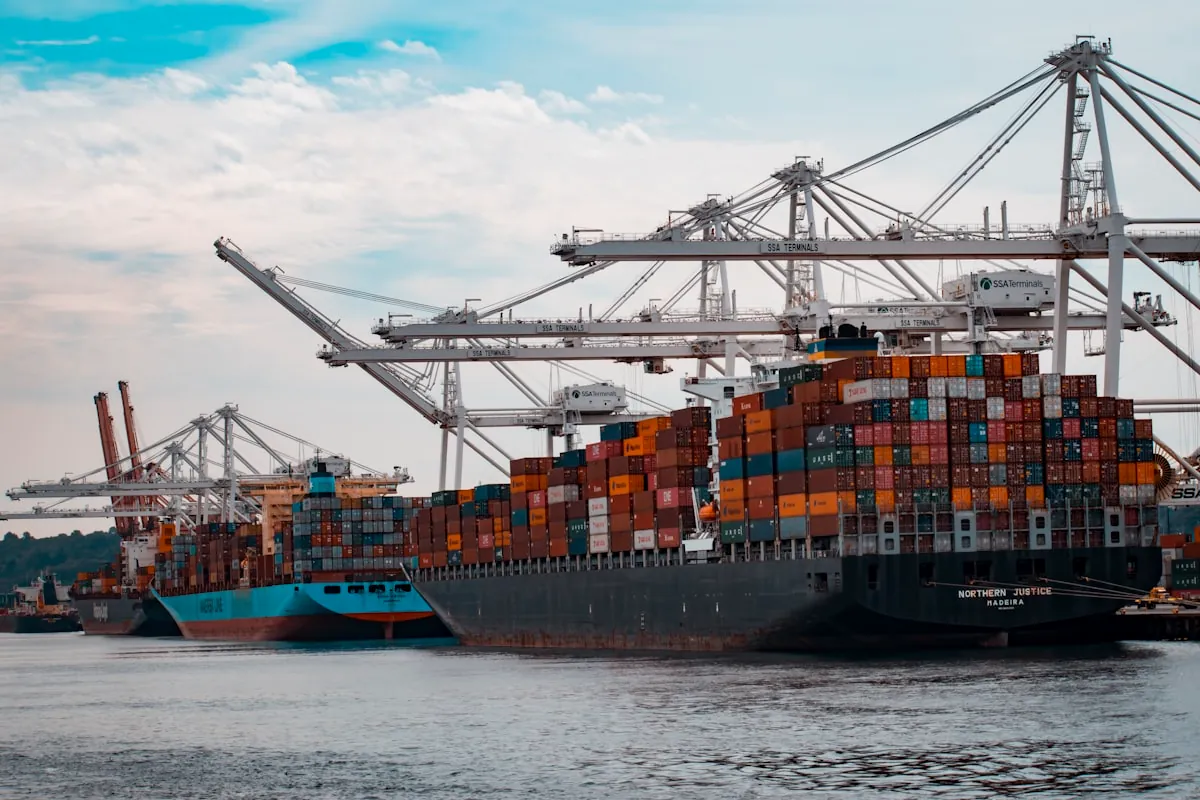
The fragility of extended offshore supply chains has been demonstrated repeatedly since 2020. Chinese API intermediate supply was disrupted by COVID-19 lockdowns in Wuhan and Shanghai, by flooding in Henan province, by energy rationing policies affecting chemical manufacturing in Zhejiang and Jiangsu, and by port congestion at Ningbo-Zhoushan and Shanghai. Indian supply experienced similar disruptions, compounded by export restrictions on certain pharmaceutical raw materials during the pandemic.
Transit times from major offshore manufacturing hubs to U.S. pharmaceutical facilities illustrate the exposure:
| Route | Average Transit Time | Range (With Delays) | Typical Customs Clearance |
|---|---|---|---|
| Shanghai to U.S. East Coast | 30-35 days | 45-90 days | 3-14 days |
| Mumbai to U.S. East Coast | 25-30 days | 40-75 days | 3-14 days |
| Hyderabad to U.S. West Coast | 28-35 days | 42-80 days | 3-14 days |
| Domestic U.S. (ground) | 2-5 days | 3-7 days | N/A |
| Domestic U.S. (express) | 1-2 days | 1-3 days | N/A |
The difference is not merely logistical — it is strategic. When a development program encounters an unexpected need for additional intermediate (a common occurrence during process optimization), a domestic partner can respond in days. An offshore supplier requires months.
Through the 2022 to 2025 period, a significant minority of chemical shipments from Asia to the US arrived two weeks or more behind schedule. For pharmaceutical companies managing clinical trial material supply or commercial launch timelines, these delays are not inconveniences — they are program-level risks that can cost millions in delayed revenue.
Intellectual Property Vulnerability
IP leakage during offshore API intermediate synthesis is a persistent concern that is difficult to quantify but consistently reported by pharmaceutical companies. The risk vectors include:
- Structural disclosure: Providing an offshore manufacturer with the structure of a proprietary intermediate reveals information about the drug candidate’s synthetic route, which can be reverse-engineered to deduce the API structure
- Process knowledge transfer: Detailed manufacturing instructions shared with offshore partners become institutional knowledge that may not be adequately protected by local legal frameworks
- Personnel mobility: High employee turnover at some offshore manufacturing facilities means that proprietary process knowledge diffuses rapidly through the local talent pool
- Weak enforcement environment: Patent and trade secret enforcement in certain jurisdictions remains challenging, with litigation timelines measured in years and outcomes uncertain
Suspected or confirmed IP misappropriation tied to offshore API and intermediate manufacturing is a recurring theme in industry discussion, though companies rarely disclose incidents publicly, so the true rate is unknown. PhRMA has repeatedly raised IP enforcement weaknesses in key manufacturing jurisdictions in its submissions to the US Trade Representative. The economic impact of IP leakage — a competitor entering the market with a generic version before patent expiry, or a contract manufacturer leveraging proprietary process knowledge for other clients — can dwarf any unit-price savings from offshore sourcing.
Domestic sourcing under U.S. legal jurisdiction provides substantially stronger IP protection. Confidentiality agreements are enforceable through federal and state courts, the Defend Trade Secrets Act of 2016 provides a federal cause of action for trade secret misappropriation, and the cultural and legal norms around IP protection are well-established.
Regulatory Exposure
The FDA’s regulatory scrutiny of offshore pharmaceutical manufacturing facilities has intensified significantly. Between 2015 and 2025, the FDA issued more than 200 warning letters to API and intermediate manufacturers in India and China, citing deficiencies in data integrity, laboratory controls, process validation, and quality system governance. Import alerts — which authorize the detention without physical examination of products from named facilities — have increased in frequency and scope.
Key regulatory risk factors for offshore intermediate sourcing include:
- FDA Import Alert 66-40: This alert covers drugs from firms not yet inspected or not inspected recently enough. Intermediates from facilities on this list face automatic detention at U.S. ports.
- Data integrity failures: The FDA has identified systematic data integrity deficiencies at offshore facilities, including backdating of analytical records, deletion of failing test results, and use of unauthorized “trial” injections that are excluded from reported data. These findings have resulted in consent decrees, import bans, and criminal referrals.
- Inspection frequency gaps: Due to resource constraints and travel restrictions, the FDA’s inspection coverage of offshore facilities remains significantly lower than domestic coverage. Between 2020 and 2024, the average interval between FDA inspections of offshore API facilities was 4.2 years, compared to 2.1 years for domestic facilities.
- Drug Supply Chain Security Act (DSCSA): The DSCSA, which reached full implementation requirements in November 2023, mandates electronic, interoperable traceability of prescription drugs throughout the U.S. supply chain. While intermediates are not directly subject to DSCSA serialization requirements, the Act’s broader emphasis on supply chain transparency and verification has increased procurement teams’ due diligence obligations for all upstream materials.
A warning letter or import alert affecting your intermediate supplier does not merely delay one shipment — it can disqualify the supplier entirely, forcing an emergency qualification of an alternative source. Qualifying a new intermediate supplier typically requires 6 to 12 months, including analytical method transfer, process validation, stability studies, and regulatory filing amendments.
Total Cost of Ownership: A Quantitative Comparison
The most persuasive argument for domestic API intermediate sourcing is financial — when total cost of ownership is calculated comprehensively, the offshore unit-price advantage frequently disappears.
The following model compares domestic and offshore sourcing for a representative heterocyclic intermediate: a protected amino acid derivative (Fmoc-4-amino-1-methylpiperidine-4-carboxylic acid) used in peptide-drug conjugate synthesis, purchased at 50 kg per year.
| Cost Category | Offshore (China) | Domestic (U.S.) |
|---|---|---|
| Unit price (per kg) | $1,200 | $1,850 |
| Annual material cost | $60,000 | $92,500 |
| Freight and insurance | $4,800 | $1,200 |
| Import duties and tariffs (current rates) | $9,600 | $0 |
| Customs brokerage and clearance | $3,200 | $0 |
| Incoming QC testing (extended panel) | $8,500 | $3,000 |
| Supplier qualification and audit (annualized) | $12,000 | $4,000 |
| Quality failure cost (expected, based on rejection rates) | $7,200 | $1,400 |
| Safety stock carrying cost (12-week vs. 2-week buffer) | $6,900 | $1,150 |
| Supply disruption risk premium (actuarial estimate) | $5,500 | $800 |
| Regulatory compliance overhead | $4,500 | $1,500 |
| Total cost of ownership | $122,200 | $105,550 |
| Effective cost per kg | $2,444 | $2,111 |
In this representative example, the offshore supplier’s 35% unit-price advantage becomes a 16% total-cost-of-ownership disadvantage when all procurement lifecycle costs are included. The magnitude of this reversal varies by intermediate, volume, and supplier quality, but the pattern is consistent: for pharmaceutical-grade intermediates where quality requirements are stringent, domestic sourcing delivers superior total economics.
Specific API Intermediate Categories: Domestic Sourcing Advantages
Different categories of API intermediates present different risk profiles, but several categories strongly favor domestic sourcing due to technical complexity, quality sensitivity, or IP considerations.
Suzuki Coupling Building Blocks
Boronic acids and boronic acid pinacol esters used in Suzuki-Miyaura cross-coupling reactions are among the most quality-sensitive API intermediates. Residual palladium contamination from the synthesis of these building blocks (which often involves palladium-catalyzed reactions themselves) is a persistent quality challenge. Palladium levels above 10 ppm in the building block can carry through to the API, requiring expensive scavenger resins or additional purification steps.
Domestic synthesis partners with ICP-MS capabilities can monitor and control palladium levels throughout the manufacturing process, delivering building blocks with palladium specifications below 5 ppm. Offshore suppliers frequently lack the analytical instrumentation or process controls to guarantee these levels consistently.
Protected Amino Acids
Fmoc-, Boc-, and Cbz-protected amino acids are critical intermediates for peptide synthesis, peptide-drug conjugates (PDCs), and peptidomimetic drug candidates. The quality requirements are exacting: optical purity must exceed 99% ee (enantiomeric excess), and racemization during the protection step must be monitored and controlled. Chiral HPLC analysis is required for every batch.
Offshore-sourced protected amino acids have shown higher variability in optical purity, with some batches delivered at 96% to 97% ee despite specifications of 99% ee or greater. For stereospecific pharmaceutical applications, this level of variability is unacceptable. Domestic partners with established chiral synthesis capabilities and in-house chiral HPLC deliver consistent optical purity with full documentation.
Heterocyclic Intermediates
Complex heterocyclic intermediates — pyrimidines, quinazolines, indoles, benzimidazoles, pyrazolopyrimidines — form the core scaffolds of a large proportion of modern small-molecule drugs. Their synthesis often involves multi-step sequences with challenging purification requirements, particularly the removal of regioisomeric byproducts that co-elute under standard HPLC conditions.
The analytical challenge of detecting and separating closely related heterocyclic impurities requires method development expertise that is not universally available at offshore facilities. Domestic partners with strong analytical chemistry capabilities can develop and validate fit-for-purpose methods that ensure the correct regioisomer is delivered at the specified purity.
Chiral Intermediates and Asymmetric Synthesis Building Blocks
Intermediates requiring asymmetric synthesis — whether through chiral catalysis, enzymatic resolution, or chiral auxiliary approaches — demand specialized expertise and equipment. Chiral GC or chiral HPLC must be available for every batch release. The consequences of delivering the wrong enantiomer or a racemic mixture in place of a single enantiomer are severe: at best, wasted material and timeline; at worst, a safety event if the wrong enantiomer carries toxicity (as tragically demonstrated by thalidomide).
Lead Time Comparison: Development Stage Impact
For pharmaceutical development programs, lead time is often more valuable than unit cost. The following comparison illustrates the timeline impact across common development scenarios:
| Scenario | Offshore Lead Time | Domestic Lead Time | Timeline Advantage |
|---|---|---|---|
| Initial route scouting (100 g) | 8-12 weeks | 2-4 weeks | 6-8 weeks |
| Process optimization resupply (1 kg) | 10-14 weeks | 3-5 weeks | 7-9 weeks |
| GLP tox batch intermediate (5 kg) | 12-16 weeks | 4-6 weeks | 8-10 weeks |
| Clinical trial material supply (25 kg) | 14-20 weeks | 5-8 weeks | 9-12 weeks |
| Emergency resupply (any quantity) | 10-16 weeks | 1-3 weeks | 9-13 weeks |
In a competitive pharmaceutical development landscape where first-to-file advantages are measured in months, not years, a 2- to 3-month timeline advantage at each intermediate procurement cycle compounds into a decisive competitive advantage over the course of a development program.
Consider a biotech developing a kinase inhibitor for oncology. The synthetic route requires three key intermediates: a chloropyrimidine building block, a boronic acid for Suzuki coupling, and a protected piperazine. If each intermediate is sourced offshore, the cumulative lead time for initial procurement is 24 to 36 weeks. Sourced domestically, the same intermediates arrive in 6 to 12 weeks — a potential 6-month acceleration of the development timeline. For a program targeting a $500 million annual revenue opportunity, 6 months of earlier market entry is worth $250 million in cumulative revenue.
Regulatory Filing Advantages of Domestic Sourcing
Domestic API intermediate sourcing provides specific advantages in regulatory filing strategy that are often overlooked by procurement teams focused on unit economics.
FDA Inspection Readiness
When intermediates are manufactured at domestic facilities with established FDA inspection histories, the regulatory risk associated with the drug substance section of an NDA or ANDA filing is substantially reduced. FDA reviewers can access prior inspection reports, and the agency’s familiarity with the facility reduces the likelihood of pre-approval inspection delays.
Drug Master File (DMF) Support
Many domestic intermediate manufacturers maintain Type II Drug Master Files with the FDA, allowing the intermediate’s manufacturing process, specifications, and quality controls to be referenced in a client’s regulatory submission without disclosing proprietary manufacturing details. DMF support from a domestic manufacturer is typically more responsive and better aligned with U.S. regulatory expectations than DMF support from offshore facilities operating in different regulatory frameworks.
Supply Chain Documentation
The DSCSA’s emphasis on supply chain transparency creates documentation requirements that are inherently simpler for domestic supply chains. Chain-of-custody documentation, transport condition monitoring, and supplier qualification records are more straightforward when all parties operate within the same regulatory and legal framework.
Risk Mitigation Strategies for Organizations Transitioning to Domestic Sourcing
For organizations currently dependent on offshore API intermediate sources, transitioning to domestic sourcing requires a structured approach:
Phase 1: Risk Assessment and Prioritization (Months 1-2)
Conduct a comprehensive risk assessment of all offshore-sourced intermediates, scoring each on quality history, supply reliability, IP sensitivity, and regulatory criticality. Prioritize intermediates in the highest-risk quartile for immediate domestic qualification.
Phase 2: Domestic Partner Identification and Qualification (Months 2-6)
Identify domestic synthesis partners with the technical capabilities, quality systems, and capacity to supply the prioritized intermediates. Conduct facility audits, request analytical method comparisons, and evaluate process capabilities against your specifications. Request trial batches for analytical comparison against current offshore material.
Phase 3: Parallel Sourcing and Validation (Months 6-12)
Run parallel supply chains for 3 to 6 months, sourcing from both offshore and domestic partners simultaneously. Compare batch quality data, delivery reliability, and total procurement costs. Use this period to build safety stock of domestically sourced material and to validate that the domestic material performs equivalently in downstream synthesis.
Phase 4: Primary Source Transition (Months 12-18)
Transition primary sourcing to the domestic partner while maintaining the offshore source as a qualified backup. Update regulatory filings as needed to reflect the new supplier. Monitor performance metrics continuously and adjust as the relationship matures.
How ChemContract Supports Domestic API Intermediate Sourcing
ChemContract provides custom synthesis of API intermediates across the full complexity spectrum — from simple building blocks to multi-step heterocyclic intermediates requiring asymmetric synthesis, hazardous chemistry, or specialized purification. As a U.S.-based synthesis partner, ChemContract delivers the timeline, quality, and IP advantages of domestic sourcing within a single integrated organization.
- Custom synthesis from milligram feasibility through multi-kilogram production scale, with a clear pathway to commercial volumes
- In-house analytical capabilities including HPLC, chiral HPLC, GC-MS, NMR, ICP-MS, and Karl Fischer, ensuring comprehensive quality control for every batch
- Typical lead times of 2 to 6 weeks for kilogram-scale intermediates, with expedited timelines available for urgent development needs
- Full cGMP compliance for intermediates destined for clinical and commercial API manufacturing
- Robust IP protection under U.S. legal jurisdiction, with comprehensive confidentiality agreements and project segregation protocols
- Dedicated project management with weekly updates, transparent communication, and proactive risk identification
- Technical expertise spanning Suzuki and Buchwald-Hartwig cross-coupling, asymmetric hydrogenation, heterocyclic synthesis, protecting group chemistry, and catalytic process optimization
For procurement teams evaluating the true cost and risk of their API intermediate supply chain, a conversation with ChemContract’s technical team can provide a detailed comparison tailored to your specific intermediates, volumes, and development timelines. The numbers consistently favor domestic sourcing — and the risk reduction is invaluable.
Frequently Asked Questions
Why is domestic API intermediate sourcing more cost-effective than offshore?
When total cost of ownership is calculated — including freight, tariffs, extended QC testing, safety stock carrying costs, supply disruption risk premiums, and regulatory compliance overhead — domestic sourcing typically delivers 10-20% lower effective cost per kilogram than offshore alternatives. The offshore unit-price advantage of 30-50% disappears when all lifecycle costs are included.
What are the biggest quality risks with offshore API intermediate sourcing?
FDA inspection data does not support the common claim that foreign facilities fail audits at dramatically higher rates — GAO has recorded broadly comparable Official Action Indicated rates, with the domestic rate sometimes higher. The real difference is oversight: foreign facilities are inspected less frequently, inspections have historically been pre-announced, and remediation is harder to compel. The risk you are pricing is slower detection and weaker leverage, not a lower baseline standard. Common issues include impurity profiles exceeding ICH limits, residual metal contamination above PDE thresholds, and inconsistent optical purity for chiral intermediates.
How much faster is domestic intermediate delivery compared to offshore?
Domestic lead times for kilogram-scale intermediates typically range from 2-6 weeks, versus 8-20 weeks for offshore sources. For emergency resupply situations, domestic partners can often deliver within 1-3 weeks compared to 10-16 weeks from overseas. This timeline advantage compounds across multi-step synthesis programs.
How does IP protection differ between domestic and offshore sourcing?
Domestic sourcing under U.S. legal jurisdiction provides substantially stronger IP protection through enforceable confidentiality agreements, the Defend Trade Secrets Act of 2016, and well-established legal norms around trade secret protection. Offshore misappropriation is under-reported because companies rarely disclose incidents, so treat the absence of published numbers as missing data rather than as evidence the risk is small.
What types of API intermediates benefit most from domestic sourcing?
Quality-sensitive intermediates benefit most, including Suzuki coupling building blocks requiring low residual palladium, protected amino acids requiring strict optical purity control, complex heterocyclic scaffolds with challenging regioisomeric purification, and chiral intermediates requiring asymmetric synthesis expertise. These categories demand analytical capabilities and process control that are more consistently available from domestic partners.
Key Takeaway
The decision of where to source API intermediates is not a simple cost comparison — it is a risk management decision with direct consequences for product quality, regulatory standing, and speed to market. When total cost of ownership is calculated honestly, domestic sourcing consistently delivers superior value for pharmaceutical intermediates where quality, IP protection, and timeline reliability are non-negotiable. Organizations that shift toward domestic API intermediate partnerships position themselves for faster development cycles, fewer regulatory surprises, and more resilient supply chains in an increasingly volatile global environment.
Simplify Your Chemical Sourcing
Partner with ChemContract for reliable domestic sourcing, transparent pricing, and full regulatory compliance.