Selecting a spirocyclic amine synthesis CRO is rarely a commodity decision. The constrained-amine scaffolds dominating modern oncology, CNS, and kinase pipelines — diazaspiro[4.4]nonane cores, bicyclo[3.2.0]heptane amines, azabicyclic ring systems — punish vendors that learned chemistry on flat aromatic targets. Yields collapse during scale-up, stereochemistry drifts between batches, and the Boc-protected intermediates that looked clean on a 10 mg analytical scale precipitate impurities at 100 g. Medicinal chemists and procurement leads searching for a partner capable of delivering these scaffolds reliably need a clear-eyed view of route selection, scale economics, and the capability gaps that disqualify most generalist CROs from the conversation.
The market for spirocyclic amine synthesis CRO services has shifted sharply in the last three years. Modern medicinal chemistry programs in oncology, CNS, and kinase inhibition rely heavily on scaffolds like 1,7-diazaspiro[4.4]nonane, bicyclo[3.2.0]heptane amines, and substituted azabicyclic ring systems — molecules that flat aromatic chemistry cannot reach. When buyers search for tert-butyl 1,7-diazaspiro[4.4]nonane synthesis or specific Boc-protected azabicyclic intermediates, they are not browsing. They have a tractable lead, a target scale, and a deadline. The CRO that wins these programs is the one that demonstrates scaffold-specific route experience before the first quote conversation, not after.
This guide breaks down why these scaffolds dominate clinical pipelines, the synthetic routes that work at gram and kilogram scale, and the capability checklist a serious medicinal chemistry buyer should run against any prospective partner.
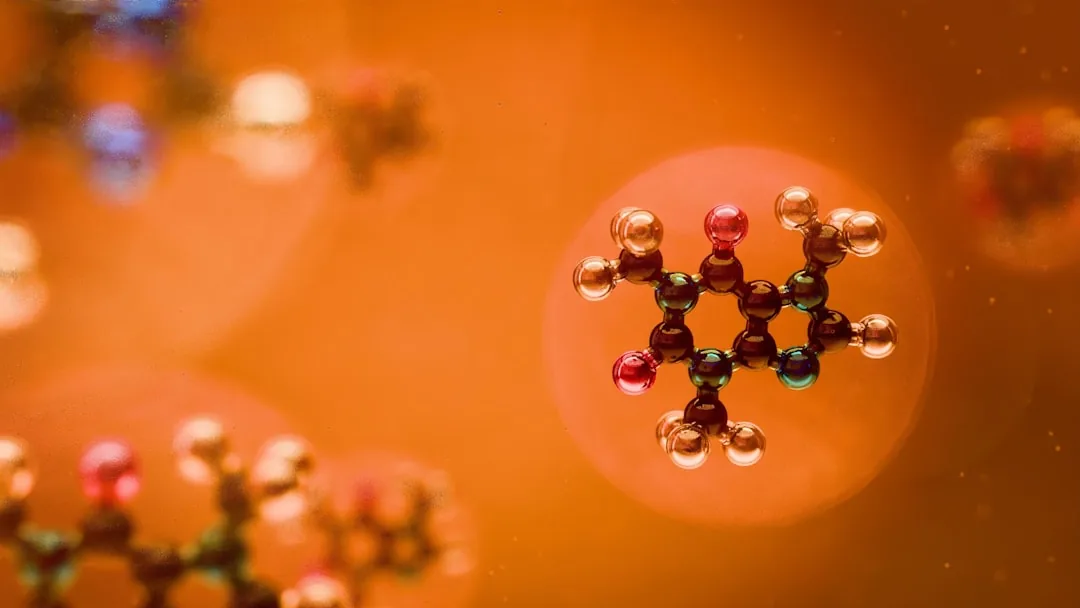 Photo by Omar Lopez-Rincon on Unsplash
Why Spirocyclic and Bicyclic Amines Dominate Modern Drug Discovery
Roughly one in five small-molecule clinical candidates entering Phase I in 2024 contained a sp3-rich spirocyclic or bicyclic core, up from fewer than one in twelve a decade earlier. The shift reflects three converging forces: depleted aromatic chemical space, the rise of fragment-based drug discovery, and tightening intellectual property landscapes that reward scaffold novelty.
Conformational Rigidity as a Drug Design Tool
Constrained amines lock the pharmacophore into a defined three-dimensional geometry. That rigidity raises target selectivity by reducing off-target conformations the molecule can sample, lowers the entropic penalty of binding, and frequently improves metabolic stability by hiding labile positions inside the ring system. For kinase inhibitor programs, where ATP-pocket geometry is unforgiving, a spirocyclic core often turns a 100 nM hit into a sub-10 nM lead without adding lipophilicity.
Scaffold Classes Most Frequently Encountered in Clinical Pipelines
Five scaffold families account for the majority of constrained-amine activity in current pipelines:
- 1,7-diazaspiro[4.4]nonane and its 2,7- and 1,8-regioisomers, dominant in kinase and GPCR programs
- 2-azaspiro[3.3]heptane and 2-azaspiro[3.4]octane, favored for CNS programs needing low molecular weight and high Fsp3
- Bicyclo[3.2.0]heptane and bicyclo[2.2.1] (norbornane) amines, common in protease and ion channel work
- Azabicyclo[3.1.0]hexane and [4.1.0]heptane, useful as proline mimetics
- Spirocyclic piperidines and pyrrolidines fused to oxetane, azetidine, or cyclobutane partners, increasingly used to escape patent space
Each family carries its own preferred disconnection logic, protecting-group strategy, and yield-limiting step. A CRO that has run programs across at least three of these families brings transferable intuition that shaves weeks off route scouting.
Key Synthetic Routes to Diazaspiro[4.4]nonane Cores
The diazaspiro[4.4]nonane class is where the most competitive sourcing battles play out. Buyers want a 1- to 100-gram batch of a substituted, mono-Boc-protected derivative delivered with a clean analytical package in under eight weeks. Three route families dominate.
Aza-Cope/Mannich Cyclization Approaches
The Overman-style aza-Cope/Mannich cascade remains a workhorse for constructing the spirocyclic carbon-nitrogen framework in a single operation. Starting from a homoallylic amine and an aldehyde partner, the iminium intermediate undergoes [3,3]-sigmatropic rearrangement followed by intramolecular Mannich closure. Yields of 55 to 70 percent are achievable on multigram scale when the geometry is right, but substrate scope is narrower than published reviews suggest. Substituents at the spirocenter often kill the rearrangement entirely.
N-Boc Protection Strategies and Deprotection
Mono-Boc protection of unsymmetrical diazaspiro cores is the single most underestimated step in this chemistry. Statistical Boc protection routinely gives 35 to 45 percent of the desired regioisomer alongside di-Boc and bis-protected byproducts that demand chromatographic separation. Selective protection requires either a temporary directing group, a pH-controlled Schotten-Baumann variant, or — increasingly — enzymatic discrimination. Deprotection at later stages must be tuned to spare acid-labile groups elsewhere on the molecule, often pushing buyers toward Cbz or Fmoc alternatives despite the orthogonality penalty.
Common Pitfalls and Yield-Limiting Steps
Three pitfalls account for most failed campaigns:
- Epimerization at the spirocenter under basic workup conditions, particularly when an alpha-acidic carbonyl sits adjacent
- Cumulative yield loss through six- to nine-step linear sequences that look reasonable on paper but compound to under 5 percent overall
- Chromatographic intractability of the final amine, which often requires conversion to a crystalline salt (HCl, oxalate, tosylate) before isolation is practical
A CRO that opens the technical kickoff by naming these pitfalls — rather than waiting to discover them — is the one worth retaining. For programs where these scale-up challenges materialize mid-campaign, a deeper treatment lives in our analysis of scale-up challenges in custom synthesis.
 Photo by Egor Myznik on Unsplash
Bicyclo[3.2.0]heptane and Azabicyclic Amines: Synthesis Considerations
Bicyclic amines bring a different set of constraints. The fused-ring geometry restricts disconnection options, and the strain energy of small fused rings can dominate transition-state selection in ways that confound predictive modeling.
Ring-Closing Metathesis vs. Cycloaddition Approaches
For bicyclo[3.2.0]heptane systems, ring-closing metathesis using second-generation Grubbs or Hoveyda-Grubbs catalysts gives reliable access to the cyclobutene precursor, which is then reduced and functionalized. The competing approach — intramolecular [2+2] cycloaddition under photochemical conditions — gives better stereocontrol but demands flow-photochemistry equipment that most discovery-scale CROs lack. The cost-benefit math depends entirely on the number of stereocenters that need defined configuration.
Trifluoroacetyl-Protected Intermediates
For azabicyclic amines, trifluoroacetyl (TFA) protection often outperforms Boc when the ring strain destabilizes the carbamate. The TFA group is small, electron-withdrawing, and removable under mild basic conditions that spare more sensitive functionality. Procurement teams should confirm that their CRO has TFA-protected intermediates available as building blocks rather than synthesizing from scratch each time — the time and cost difference is meaningful at any scale beyond a single program.
Scale Considerations: Milligram Library to Gram-Scale IND Batches
The gap between discovery-scale and development-scale spirocyclic amine synthesis is where most vendor relationships fail. A CRO that delivers 50 mg of a Boc-protected diazaspiro core in three weeks is not necessarily the same CRO that can deliver 500 g six months later. Three capability tiers separate them:
- Discovery scale (1 mg to 5 g) uses parallel synthesis, microwave assistance, and minimal process optimization. Speed and analog diversity matter more than yield.
- Lead optimization scale (5 g to 100 g) demands route consolidation, impurity identification, and the first serious thinking about chromatography-free purification.
- IND-enabling scale (100 g to 10 kg) requires real process chemistry: solvent selection, crystallization development, in-process controls, and a defensible impurity profile under cGMP-aligned documentation.
Buyers running hit-to-lead chemistry programs often underestimate the route-redevelopment work needed to move between tiers. The savings from picking a discovery-only vendor evaporate the moment the program advances and the route has to be rebuilt from scratch.
For ChemContract Research, the relevant capability sits inside our custom synthesis and manufacturing service, which spans milligram prototypes to multi-ton batches under a single quality system.
 Photo by Adam Bezer on Unsplash
What to Look For in a CRO: Spirocyclic Amine Capability Checklist
Use this checklist on every spirocyclic amine synthesis CRO before issuing a purchase order:
- Documented route experience on a structurally similar scaffold within the last 24 months. Ask for a redacted case study, not a marketing one-pager.
- Chiral analytical depth — chiral HPLC method development, chiral SFC where relevant, and the ability to defend enantiomeric excess to two decimal places.
- NMR coverage including 2D experiments (COSY, HSQC, HMBC, NOESY) to confirm regiochemistry and stereochemistry, not just identity.
- Mass spectrometry under both ESI and APCI to catch ionization-suppressed impurities common in basic amine workups.
- Crystallization development capability to convert intractable free amines into isolable salts.
- Pilot-plant or kilo-lab access if the program has any realistic chance of advancing past lead optimization.
- A written change-control protocol so route adjustments between batches are documented, not discovered during impurity investigation.
- Transparent yield reporting — a CRO that quotes only the final-step yield, never the cumulative linear yield, is hiding something.
Programs targeting regulated markets should also map the CRO’s capability against the published FDA guidance for IND-enabling chemistry, particularly the documentation expectations for impurity qualification.
ChemContract Research: Scaffold Library and Custom Synthesis Record
ChemContract Research has delivered constrained-amine intermediates across the diazaspiro, azaspiro, and bicyclic families to more than 200 medicinal chemistry programs since 2000. Our network of 60-plus facilities and 500-plus scientists supports route scouting and execution from milligram prototypes through multi-ton manufacturing under a single quality system. Standard delivery for analog campaigns runs two to four weeks; quotes are returned within 24 hours.
For programs that combine spirocyclic synthesis with downstream analog screening, our combinatorial and automated synthesis service generates structure-activity relationship libraries against the validated scaffold without the route degradation that typically occurs when SAR work is split across vendors. Buyers comparing capability across the broader market should also review the framework laid out in our CRO vs CDMO decision guide, which clarifies when scaffold-specialist CRO engagement outperforms a CDMO-led approach.
Request a Quote for Your Specific Spiro or Bicyclic Target
Send the structure, the target scale, the analytical package required, and the delivery deadline. Quotes for diazaspiro and bicyclic amine targets are returned within 24 hours and include a route summary, a proposed analytical method, and a candid discussion of risk areas before any commitment. Request a project quote to start the conversation, or browse our broader contract R&D capabilities for context on what a full discovery-to-development engagement looks like.
The right partner does not just make the molecule. The right partner shortens the path between the molecule you have and the molecule that earns the IND.
Frequently Asked Questions
What is a spirocyclic amine synthesis CRO and when should you use one?
A spirocyclic amine synthesis CRO is a contract research organization with documented experience producing constrained-amine scaffolds — diazaspiro, azaspiro, and bicyclic ring systems — at discovery through development scale. Engage one when your in-house team lacks scaffold-specific route experience, when you need parallel synthesis of analog libraries, or when scale-up beyond a few grams demands process optimization that distracts from program-critical medicinal chemistry.
How long does diazaspiro[4.4]nonane synthesis typically take?
A first-time route to a substituted 1,7-diazaspiro[4.4]nonane derivative typically takes 4 to 8 weeks at gram scale once a published or validated route is selected. Novel substitution patterns or unprecedented stereochemistry may extend this to 12 to 16 weeks because route scouting and chiral resolution add iterative cycles. Plan timelines around analytical milestones rather than calendar weeks.
Why are spirocyclic amines so common in modern drug discovery?
Spirocyclic amines provide three-dimensional rigidity that improves selectivity, metabolic stability, and intellectual property differentiation compared with flat aromatic scaffolds. The conformational constraint locks pharmacophore geometry into its bound state, which often raises potency and reduces off-target binding — particularly valuable in kinase inhibitor and CNS programs.
What scale can a CRO realistically deliver for a spirocyclic amine?
Capability varies dramatically. Discovery-focused vendors deliver milligrams to a few grams. Mid-tier CROs reach 100 g to 1 kg of GMP intermediate. Full-spectrum partners with route development and pilot-plant capability handle 10 kg to multi-ton campaigns for IND-enabling tox lots and Phase I clinical supply. Confirm the target scale before signing, not after.
How do I evaluate a CRO’s spirocyclic amine capability before signing?
Request three deliverables: a redacted case study on a structurally similar scaffold, the analytical package (NMR, HPLC, chiral HPLC, MS) for a recent batch, and a written discussion of common pitfalls in your scaffold class. Vendors that produce all three within two weeks have actual experience. Vendors that hedge or substitute marketing collateral do not.
Key Takeaway
Spirocyclic and bicyclic amine programs reward CRO partnerships built on demonstrated route experience, transparent yield data, and the analytical depth to defend stereochemical and impurity claims at every scale. The wrong vendor will burn six months of program time on a single chiral resolution that should have been engineered out of the route. The right one compresses your timeline by bringing scaffold-specific intuition the first day of the project. Evaluate capability, not pricing, when the molecule matters.
Ready to Move Your Project Forward?
Partner with ChemContract for reliable sourcing, custom synthesis, and full regulatory compliance.