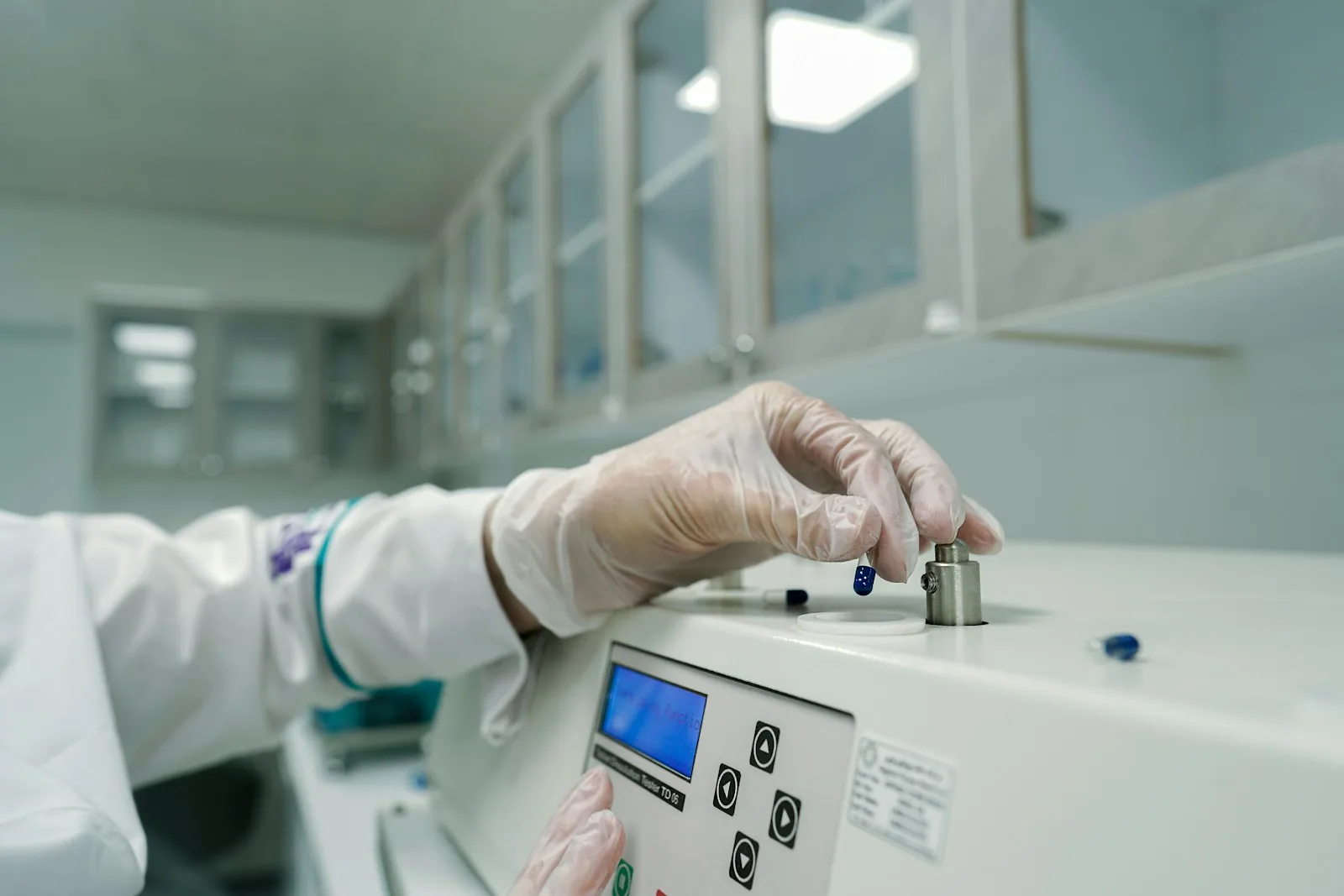
Scaling a chemical synthesis from laboratory bench to production volumes is one of the most critical — and risky — phases in product development. What works elegantly at the milligram scale can fail catastrophically at the kilogram scale. Heat transfer changes, mixing dynamics shift, purification bottlenecks emerge, and safety hazards that were negligible in small quantities become serious operational concerns. Understanding these challenges — and having the right custom synthesis partner to navigate them — can mean the difference between on-time delivery and costly project delays.
The Physics of Non-Linear Scaling
Chemical reactions do not scale linearly. This is not a minor inconvenience — it is a fundamental physical reality that has derailed countless custom synthesis scale-up campaigns. The root cause lies in how geometric scaling affects three critical transport phenomena: heat transfer, mass transfer, and fluid dynamics.
Surface-Area-to-Volume Ratio
The most important scaling relationship in chemistry is the surface-area-to-volume ratio. For a cylindrical reactor, volume scales with the cube of the radius while surface area scales with the square. A 10-fold increase in reactor diameter yields a 1,000-fold increase in volume but only a 100-fold increase in surface area. Since heat removal occurs through reactor walls (surface area) while heat generation occurs throughout the bulk (volume), larger reactors are inherently less efficient at temperature control.
In practical terms, a 250 mL round-bottom flask has a surface-area-to-volume ratio of approximately 25 cm^-1. A 1,000 L glass-lined reactor drops to roughly 0.3 cm^-1 — nearly a 100-fold reduction.
This means that an exothermic reaction easily managed with a water bath at bench scale may require engineered cooling systems, staged reagent addition, or fundamentally different process conditions at production scale.
Heat Transfer Coefficients and Thermal Management
Heat transfer in a stirred tank reactor follows Newton’s law of cooling, governed by the overall heat transfer coefficient (U), the available heat transfer area (A), and the temperature difference between the reactor contents and the cooling medium (delta-T). At bench scale, typical U values range from 200 to 500 W/m^2K in glass vessels. At production scale in glass-lined steel reactors, U values drop to 100 to 300 W/m^2K due to the additional thermal resistance of the glass lining and steel wall.
This reduction compounds the surface-area-to-volume problem. When a reaction generates 150 kJ/mol of heat at bench scale, the small flask easily dissipates it through ambient cooling. At 1,000 L scale, the same reaction may require jacket cooling at -20 degrees Celsius, controlled reagent addition over several hours, or both. Failure to account for these thermal limitations has caused some of the most dangerous incidents in chemical manufacturing history.
Reynolds Number and Mixing Regimes
Mixing behavior changes fundamentally with scale. The Reynolds number (Re), which characterizes the flow regime in a stirred vessel, depends on impeller speed, impeller diameter, fluid density, and viscosity.
At bench scale, achieving turbulent flow (Re > 10,000) is straightforward with a magnetic stir bar or overhead stirrer. At production scale, the larger vessel dimensions and different impeller geometries can create laminar zones, dead spots, and vortex formation that alter reaction kinetics entirely.
A reaction that achieves complete mixing in under one second at bench scale may have mixing times of 30 to 60 seconds in a 4,000 L reactor. For fast reactions — particularly those with competing side reactions — this difference in mixing time directly affects selectivity and yield.
Reactions that are “kinetically controlled” at bench scale may become “mixing-controlled” at production scale, producing entirely different impurity profiles.
Scale-Dependent Failure Modes
Understanding the physics of scaling is essential, but recognizing the specific failure modes that emerge at scale is equally critical. These failures often appear without warning during the first production-scale batch.
Exothermic Runaway Events
Exothermic runaways represent the most dangerous scale-up failure. At bench scale, a 5-degree temperature excursion is easily corrected by adjusting the cooling bath. At production scale, the same excursion in a 2,000 L reactor containing hundreds of kilograms of material can trigger a cascading thermal event. The Arrhenius equation dictates that reaction rate approximately doubles for every 10-degree temperature increase, meaning a small thermal excursion rapidly accelerates, generating more heat faster than the cooling system can remove it.
Historical incidents reinforce this risk. The T2 Laboratories explosion in 2007 killed four workers when a metallic sodium-catalyzed reaction underwent thermal runaway in a 2,500-gallon reactor. The reaction had been run successfully at smaller scales for years.
The investigation revealed that inadequate cooling capacity at production scale, combined with the loss of a cooling system, allowed temperatures to reach decomposition thresholds within minutes.
Crystallization Failures
Crystallization processes are notoriously scale-sensitive. At bench scale, rapid cooling in a small flask produces consistent crystal size distributions. At production scale, the slower cooling rates inherent in large vessels (again, the surface-area-to-volume problem) produce different nucleation and crystal growth kinetics. Common failures include oiling out instead of crystallization, formation of metastable polymorphs that convert to the wrong crystal form, needle-like crystal habits that clog filters and resist drying, and agglomeration that traps impurities and mother liquor.
A compound that crystallizes as free-flowing cubes at 100 mL scale may form a sticky, unfiltereable mass at 500 L scale. This is not a chemistry failure — it is a scale-dependent physical phenomenon that requires specific process engineering to address.
Filtration and Drying Bottlenecks
Filtration performance at scale depends on the specific cake resistance of the solid product, which is influenced by crystal morphology, particle size distribution, and compressibility. A filtration that takes 15 minutes on a Buchner funnel at lab scale may require 8 to 12 hours on an industrial filter at production scale if the crystal properties are unfavorable. In some cases, the product simply cannot be filtered at scale using conventional equipment, requiring complete redesign of the isolation step.
Drying introduces additional complications. Residual solvent removal that occurs in hours in a rotary evaporator may take days in a large filter dryer. Thermal sensitivity limits drying temperatures, and thick cake beds create diffusion barriers that resist solvent removal. These bottlenecks can transform a 3-day bench process into a 2-week production campaign.
The Staged Scale-Up Approach
Systematic scale-up follows a staged approach, with each stage serving a specific purpose and producing defined deliverables. Skipping stages — a temptation when timelines are tight — is one of the most common and costly mistakes in scale-up.
Bench Scale (10 mL to 1 L)
Bench-scale work establishes the fundamental chemistry and identifies the optimal synthetic route. This is where route scouting evaluates multiple pathways for yield, selectivity, safety, and scalability. Typical activities include solvent screening across 10 to 20 candidates, reagent equivalency optimization, temperature and concentration profiling, initial impurity identification by HPLC and LC-MS, and preliminary crystallization development. Budget expectation for a thorough bench-scale campaign is $30,000 to $80,000 depending on route complexity, with a timeline of 4 to 12 weeks.
Kilo Lab Scale (1 L to 20 L)
The kilo lab is where process chemistry begins to separate from discovery chemistry. Reactions are run in jacketed glass reactors with controlled addition rates, calibrated temperature profiles, and overhead stirring that better approximates production-scale mixing. This stage reveals the first scale-dependent behaviors: heat transfer limitations become measurable, mixing effects on selectivity become apparent, crystallization behavior under controlled cooling rates can be evaluated, and filtration and drying performance can be projected. Budget expectation is $50,000 to $150,000, with a timeline of 6 to 16 weeks including analytical method development.
Pilot Plant Scale (20 L to 200 L)
Pilot plant operations validate the process under conditions that closely approximate production. Reactors are typically glass-lined steel with industrial agitators, and operations follow cGMP protocols with full batch documentation. This stage confirms that the process is robust, reproducible, and safe at near-commercial scale. Pilot campaigns typically produce 5 to 50 kg of product, enough for stability studies, formulation development, and clinical supply. Budget expectation is $100,000 to $400,000, with a timeline of 8 to 20 weeks including regulatory documentation.
Production Scale (200 L to 10,000+ L)
Production-scale execution is the culmination of the entire scale-up campaign. By this stage, every process parameter should be defined, every critical quality attribute should have a proven control strategy, and the safety profile should be fully characterized. First production batches still carry risk — they validate the engineering translation of pilot-scale parameters — but that risk should be managed and predictable, not speculative.
Design of Experiments (DoE) for Process Optimization
Traditional one-factor-at-a-time (OFAT) experimentation is inefficient and blind to parameter interactions. A reaction influenced by temperature, concentration, addition rate, and catalyst loading has four factors. Studying each at three levels using OFAT requires 12 experiments but reveals nothing about how these factors interact. A full factorial design would require 81 experiments — impractical at any scale.
Design of Experiments provides a structured, statistically rigorous approach. A fractional factorial or response surface design can map the same four-factor space in 15 to 25 experiments while capturing both main effects and two-factor interactions. The output is a mathematical model that predicts yield, purity, and impurity levels as functions of the input parameters.
DoE is particularly valuable during scale-up because it identifies the design space — the range of process parameters within which the process consistently meets specifications. This design space provides operational flexibility at production scale. If the cooling system cannot achieve the target temperature as quickly as in the pilot plant, the DoE model reveals whether a slightly different temperature profile still produces acceptable product. Critical DoE outputs for scale-up include identification of critical process parameters (CPPs), proven acceptable ranges (PARs) for each parameter, interaction effects that may amplify or cancel at different scales, and optimized set points that maximize robustness rather than just yield.
Process Analytical Technology (PAT) in Scale-Up
Process Analytical Technology refers to real-time measurement tools that replace offline laboratory testing during manufacturing. PAT is not merely a regulatory expectation under FDA’s PAT guidance — it is a practical necessity for managing scale-dependent variability.
Key PAT Tools for Scale-Up
In-situ FTIR and Raman spectroscopy provide real-time reaction monitoring without sampling. ReactIR and similar probes track functional group transformations, enabling precise endpoint determination. At production scale, where a missed endpoint can waste an entire batch worth hundreds of thousands of dollars, real-time monitoring pays for itself immediately.
Focused Beam Reflectance Measurement (FBRM) tracks crystal chord length distribution in real time during crystallization. This tool is invaluable for detecting the onset of nucleation, monitoring crystal growth rates, and identifying agglomeration — all phenomena that behave differently at scale than at bench.
Particle Vision and Measurement (PVM) provides real-time imaging of crystals and particles in process, complementing FBRM with visual confirmation of crystal habit and morphology changes.
In-line pH, dissolved oxygen, and temperature probes provide continuous monitoring of basic process parameters with the resolution needed to detect deviations before they affect product quality.
Safety Assessment: Calorimetry and Thermal Hazard Evaluation
Safety assessment is non-negotiable in scale-up. The consequence of an uncharacterized thermal hazard at production scale can be catastrophic. Three calorimetric techniques form the backbone of thermal safety assessment.
Differential Scanning Calorimetry (DSC)
DSC screens for thermal events by heating a small sample (2 to 10 mg) at a controlled rate and measuring heat flow. It identifies exothermic decomposition temperatures, melting points, and polymorphic transitions. DSC is a rapid screening tool — a single scan takes 30 to 60 minutes — but it operates under conditions (sealed pan, linear heating rate) that do not perfectly represent process conditions.
Reaction Calorimetry (RC1)
The RC1 reaction calorimeter is the gold standard for process-scale thermal characterization. Operating at 0.5 to 2 L scale, the RC1 measures heat generation under actual process conditions — real solvents, real concentrations, real addition rates. It provides the total heat of reaction (kJ/mol), heat generation rate profiles (W/kg), and the maximum temperature of the synthesis reaction (MTSR). The MTSR is a critical safety parameter: it represents the temperature the batch would reach if cooling failed at the worst possible moment. If the MTSR exceeds the onset temperature of decomposition (identified by DSC), the process has an inherent thermal hazard that must be engineered out before production.
Accelerating Rate Calorimetry (ARC)
ARC characterizes the thermal stability of materials under adiabatic conditions — the worst-case scenario where no heat is removed. The ARC detects self-heating onset temperatures, the time to maximum rate under adiabatic conditions, and pressure generation during decomposition. These data directly inform emergency venting calculations and thermal runaway scenario planning at production scale.
Quality by Design Across Scales
ICH Q8 (Pharmaceutical Development) establishes the Quality by Design (QbD) framework that should guide scale-up from the earliest development stages. QbD is not a regulatory checkbox — it is a systematic methodology for building quality into the process rather than testing for it after the fact.
At each scale, QbD requires defining the Quality Target Product Profile (QTPP), identifying Critical Quality Attributes (CQAs) through risk assessment, linking CQAs to Critical Process Parameters (CPPs) through mechanistic understanding and DoE, establishing a design space within which the process reliably meets specifications, and implementing a control strategy that ensures CQAs are met during routine production. The design space established at pilot scale must be verified — not assumed — at production scale. Changes in equipment geometry, heat transfer characteristics, and mixing dynamics can shift the relationship between CPPs and CQAs in ways that render the pilot-scale design space invalid.
Impurity Challenges That Emerge at Scale
Scale-up frequently introduces new impurities or amplifies trace impurities that were below detection limits at bench scale. Common scale-dependent impurity sources include thermal degradation products from hot spots in large reactors, over-addition artifacts from poor mixing at reagent addition points, metal leachates from reactor walls (particularly in glass-lined steel vessels where glass damage exposes the underlying alloy), and residual solvent impurities that become significant when drying efficiency decreases at scale.
Identifying and controlling these impurities requires robust analytical methods developed early in the scale-up campaign. Late-stage analytical surprises — discovering an unknown impurity at 0.15% in the first production batch — can delay release by weeks and cost hundreds of thousands of dollars in investigation and rework.
Solvent Selection for Scalability
Solvent choice at bench scale often prioritizes reaction performance without considering scalability. A synthesis developed using dichloromethane (DCM) as the primary solvent may achieve excellent yield and purity, but DCM presents serious challenges at production scale: it is a Class 2 residual solvent with strict limits under ICH Q3C (600 ppm), requires specialized recovery equipment due to its density and volatility, and carries increasing environmental and regulatory burden.
Scalable solvent selection balances reaction performance against practical factors. Preferred solvents for production-scale synthesis include 2-methyltetrahydrofuran (2-MeTHF) as a greener replacement for THF with comparable solvating power, isopropyl acetate (IPAc) as an alternative to ethyl acetate with better water rejection, ethanol and isopropanol as versatile protic solvents with favorable safety and environmental profiles, and heptane as a preferred replacement for hexane in crystallizations and extractions. Early solvent screening during bench-scale development — testing the top 3 to 5 scalable solvents before locking the process — prevents costly re-development later. Our article on green chemistry in contract R&D covers sustainable solvent substitution strategies in detail.
Regulatory Documentation for Scale-Up
Scale-up is not just a technical exercise — it generates the regulatory documentation foundation for commercial manufacturing. ICH Q8 (Pharmaceutical Development), Q9 (Quality Risk Management), and Q10 (Pharmaceutical Quality System) collectively define the regulatory expectations for scale-up documentation.
Key documentation deliverables at each stage include development reports capturing route selection rationale and process optimization data, risk assessments identifying and mitigating potential failure modes at each scale, batch records with complete traceability from raw materials to finished product, analytical method validation reports demonstrating that quality attributes can be measured reliably, and stability data supporting the shelf life of material produced at each scale. Gaps in documentation at early stages become expensive to fill retroactively. A well-structured scale-up campaign generates regulatory-ready documentation as a natural byproduct of the development process.
Timeline and Cost Expectations
Realistic timeline and cost planning is essential for scale-up success. Compressed timelines lead to skipped stages, and skipped stages lead to failures.
A typical small-molecule pharmaceutical scale-up from route selection to first production batch spans 12 to 24 months. The breakdown varies, but a representative timeline includes bench-scale route scouting and optimization at 3 to 6 months, kilo-lab process development and safety assessment at 3 to 5 months, pilot-plant validation and cGMP batch production at 3 to 6 months, and production-scale technology transfer and first batch at 2 to 4 months. Total program costs range from $200,000 for simple, well-understood chemistries to $1,000,000 or more for complex, multi-step syntheses requiring extensive process development. These figures include analytical development, safety assessment, and regulatory documentation but exclude raw material costs for production batches.
Frequently Asked Questions
Why do chemical reactions fail at larger scale?
Chemical reactions fail at scale primarily because of non-linear physics. The surface-area-to-volume ratio drops dramatically as reactor size increases — a 1,000 L reactor has roughly 100x less relative surface area than a 250 mL flask. Since heat removal depends on surface area while heat generation depends on volume, larger reactors are far less efficient at temperature control. Mixing times also increase from under one second at bench scale to 30-60 seconds in large reactors, changing reaction selectivity and impurity profiles.
What is a thermal runaway and how is it prevented?
A thermal runaway occurs when an exothermic reaction generates heat faster than the cooling system can remove it. The increasing temperature accelerates the reaction rate (roughly doubling for every 10-degree rise), creating a dangerous cascade. Prevention requires thorough calorimetric characterization (DSC, RC1, ARC) to understand the reaction’s thermal behavior, plus engineering controls such as controlled reagent addition rates, adequate cooling capacity, and emergency procedures for cooling failure scenarios.
How long does a typical pharmaceutical scale-up take?
A complete scale-up from route selection to first production batch typically spans 12 to 24 months. The breakdown includes 3 to 6 months for bench-scale route scouting, 3 to 5 months for kilo-lab process development and safety assessment, 3 to 6 months for pilot-plant validation, and 2 to 4 months for production-scale technology transfer. Compressed timelines lead to skipped stages, and skipped stages are the most common cause of scale-up failure.
What is Design of Experiments (DoE) and why use it for scale-up?
Design of Experiments is a structured statistical approach for optimizing processes by studying multiple parameters simultaneously. Unlike one-factor-at-a-time experimentation, DoE captures interaction effects between parameters and identifies the design space — the range of conditions where the process reliably meets specifications. A DoE study of four factors can map the full parameter space in 15-25 experiments versus 81 for a full factorial, making it both more efficient and more informative.
What process safety testing is required before production-scale synthesis?
Essential safety testing includes DSC screening for thermal decomposition, reaction calorimetry (RC1) to measure heat generation under actual process conditions, and ARC testing for worst-case adiabatic scenarios. The RC1 determines the Maximum Temperature of the Synthesis Reaction (MTSR) — if MTSR exceeds decomposition onset temperature, the process has an inherent thermal hazard that must be engineered out. Budget $20,000 to $80,000 for comprehensive process safety testing.
How a Qualified Scale-Up Partner Adds Value
The expertise required for successful scale-up spans organic chemistry, chemical engineering, process safety, analytical chemistry, and regulatory science. Few organizations maintain all of these capabilities in-house, which is why contract R&D partnerships play a critical role.
ChemContract Research brings an integrated approach to scale-up that addresses each of the challenges described above. Our custom synthesis team has navigated hundreds of scale-up campaigns across diverse chemistry types — from high-energy intermediates requiring careful thermal management to crystallization-sensitive APIs demanding precise polymorph control. Our capabilities include fully equipped kilo-lab and pilot-plant facilities with jacketed reactors from 10 L to 200 L, in-house reaction calorimetry (RC1) and thermal screening (DSC, TGA) for comprehensive safety assessment, PAT-enabled reactors with in-situ FTIR and FBRM for real-time process monitoring, DoE-driven process optimization with statistical modeling expertise, and regulatory documentation packages aligned with ICH Q8, Q9, and Q10 expectations.
We treat scale-up as an integrated program — not a series of disconnected toll-manufacturing steps. Process knowledge accumulated at each stage directly informs the next, reducing risk and compressing timelines. For organizations evaluating scale-up partners, the key differentiator is not equipment size but the depth of process understanding that a partner brings to every scale transition.
Key Takeaway
Scale-up success depends on anticipating challenges before they become expensive problems. By combining deep chemistry expertise with systematic process engineering, the right contract synthesis partner transforms scale-up from a high-risk endeavor into a managed, predictable process. Choose a partner who has done it before — and can prove it.
Get Custom Synthesis from mg to Multi-Ton
From route design to commercial delivery — our 500+ scientists handle the chemistry so you can focus on your pipeline.